The Winchester Star Awards Winner - 7 Years in a row

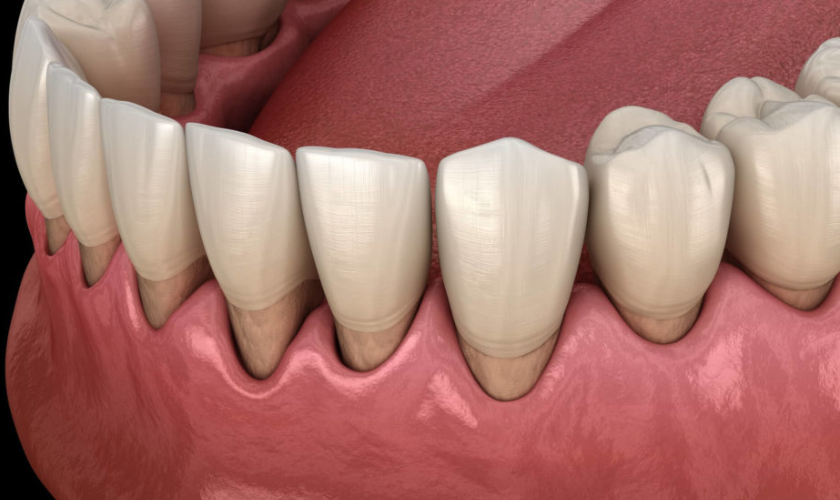
If your teeth suddenly look longer, feel sensitive near the gumline, or you can see a notch where the tooth meets the gum, you’re likely looking at gum recession — and you’re far from alone. It’s one of the most common problems we see at our Winchester office, and one of the most misunderstood. Here’s the honest guide: why it happens, whether gums can grow back (short answer: no, but keep reading), what actually fixes it, and what treatment realistically costs.
Why gums recede
Gum recession is rarely caused by one thing. The usual suspects, often working together, are:
Brushing too hard. Scrubbing with a stiff brush wears gum tissue away over years — we see this constantly in people with otherwise excellent hygiene. Gum (periodontal) disease. Bacterial infection below the gumline destroys the tissue and bone that hold gums in place; this is the most serious cause because it keeps progressing untreated. Genetics. Some people are simply born with thinner gum tissue that recedes more easily, no matter how careful they are. Grinding and clenching. Heavy bite forces flex teeth at the gumline and accelerate recession. Tobacco in any form restricts blood flow to gum tissue. And orthodontic movement or tooth position — teeth that sit outside the bone’s natural envelope often have thin, recession-prone tissue over them.
Can receding gums grow back?
No — gum tissue does not regenerate on its own, and no toothpaste, oil pull, or rinse will regrow it, whatever the internet says. Once tissue is lost, the only way to restore coverage is to move or graft tissue there surgically. That’s the honest answer. The good news is twofold: recession can almost always be stopped from getting worse, and when it does need fixing, gum grafting is a routine, predictable procedure with excellent success rates.
How to stop recession from getting worse
Before anyone talks surgery, the cause has to be addressed — otherwise even a perfect graft will recede again. Depending on what we find, that means switching to a soft brush and lighter technique (an electric brush with a pressure sensor is a worthwhile investment), treating active gum disease with a deep cleaning (scaling and root planing) or laser gum therapy, a night guard if grinding is flexing your teeth, and regular professional cleanings to keep bacteria below the danger line. For mild recession without sensitivity or decay risk, stabilizing it and monitoring is often the entire treatment plan.
How to fix receding gums: your treatment options
When recession is deep enough to cause sensitivity, root decay risk, or cosmetic concern, treatment moves up a step. Bonding or a filling can cover an exposed, sensitive root surface — a quick fix for symptoms, though it doesn’t replace lost tissue. Gum grafting is the definitive fix: a small amount of tissue (usually borrowed from the roof of your mouth, or from a donor source so nothing is taken from your palate at all) is placed over the exposed root and secured, where it heals into thick, stable gum. Modern techniques are far gentler than their reputation — most patients describe the recovery as “a few days of eating soft foods,” and sedation is available for anyone who wants to sleep through it. Which technique fits you depends on how much tissue is lost, how thick your remaining gum is, and how many teeth are involved — that’s a decision we make together after an exam and honest conversation, not a one-size-fits-all sell.
What does gum recession treatment cost?
Nationally, a gum graft typically runs about $600–$1,200 per tooth, with the total depending on the technique, the tissue source, and how many sites are treated in one visit (treating neighboring teeth together usually costs less per tooth). Deep cleanings and laser therapy for active gum disease are considerably less, and dental insurance frequently covers a meaningful portion of both when there’s documented disease or recession — our team verifies your benefits before anything begins so the number you approve is the number you pay. No insurance? Our Dental Savings Plan was built for exactly this situation.
When to have it looked at
Recession itself doesn’t hurt — which is exactly why it tends to be ignored until a root gets sensitive or decayed. If you’ve noticed longer-looking teeth, temperature sensitivity near the gumline, bleeding when you brush, or a visible notch at the gum’s edge, it’s worth an exam now rather than later: stopping recession early is simple and cheap, while replacing a tooth lost to advanced gum disease is neither. We’ll tell you plainly whether yours needs treatment, monitoring, or just a softer toothbrush — voted Best Dental Office in Winchester seven years running, partly because we’re comfortable saying “this doesn’t need treatment yet.”